

Open ’til 7pm + Saturday
Call
832-804-7427
832-804-7427

Affordable dental implants in Houston, TX, are possible when treatment is planned around what you actually need, fees are clearly itemized, and safety steps are not skipped. The best value is usually not the lowest advertised price, but a complete plan that includes proper imaging, qualified care, durable materials, and realistic follow-up costs.
If you're weighing tooth replacement options or worried about bone loss after a missing tooth, learning more about dental implants can clarify whether they offer the right balance of durability and long-term value for you. Lovett Dental in Houston, TX, can explain implant options, expected costs, and what each step entails to help you make an informed decision.
Implant pricing varies because an implant is a treatment process, not a single item. A complete tooth replacement often includes the implant post, the abutment, and the final crown, but some advertised prices include only one part. For a deeper look at pricing factors, see the cost of dental implants.
The total fee may also include the exam, 3D imaging, tooth extractions, sedation, temporary teeth, bone grafting, lab work, and follow-up visits. Ask for a written, itemized estimate so you can see what is included, what is optional, and what might add cost later.
Dental insurance may help with related services such as extractions or crowns even if it does not cover the implant itself. HSA or FSA funds, phased treatment, and third-party financing may also help, but it is important to review interest rates, deferred-interest terms, and total repayment costs.
The number and position of missing teeth affect cost right away. One missing tooth may need one implant and one crown, while several missing teeth may be restored more efficiently with an implant-supported bridge.
Bone support also matters. Bone loss after a missing tooth, gum disease, or anatomic limits may mean grafting or a sinus-related procedure is needed before or during placement, and some cases are handled by an oral surgery team.
Fees can also change based on clinician training, case difficulty, implant system, lab materials, and the type of final restoration. A lower quote is not always a problem, but it should be compared against the same scope of care.
|
Treatment Approach |
Common Use |
Important Cost Considerations |
|---|---|---|
|
Single implant and crown |
One missing tooth |
Confirm whether the post, abutment, crown, imaging, and follow-up are included |
|
Implant-supported bridge |
Several adjacent missing teeth |
May use fewer implants than replacing each tooth separately |
|
Implant-retained denture |
Loose or unstable removable denture |
Ask whether the denture, attachment components, and maintenance are included |
|
Full-arch fixed restoration |
Most or all teeth in one arch |
Usually requires extensive planning, temporary teeth, and laboratory work |
A proper implant evaluation usually includes a medical and dental history, a gum exam, a bite review, and a 3D cone-beam CT scan when necessary. This imaging can help identify bone limits and nearby structures such as nerves and sinuses.
Ask who will place the implant and who will make the final tooth. See who does dental implants to better understand the provider roles involved.
Training, experience with the proposed procedure, infection-control standards, and a plan for complications matter more than promotional language. Extremely low pricing may apply only to simple cases or to one stage of treatment.
Useful questions to ask include:
Be cautious if you feel pressured to commit quickly, if permanent success is guaranteed, or if treatment is proposed without a full exam and appropriate imaging. Those are signs to slow down and compare options carefully.
Many adults with missing or nonrestorable teeth may qualify for implants, including some patients with bone loss. Candidacy depends on oral health, available bone, healing ability, bite forces, medical history, medications, and daily hygiene habits.
Active gum disease and untreated decay usually need to be treated first. Smoking or vaping, poorly controlled diabetes, teeth grinding, certain medications, and a history of head or neck radiation can raise the risk of complications, but they do not automatically rule out treatment.
Alternatives may include a traditional bridge, removable partial denture, or complete dentures. A dentist can compare the expected lifespan, maintenance, effect on nearby teeth, and total cost of each option.
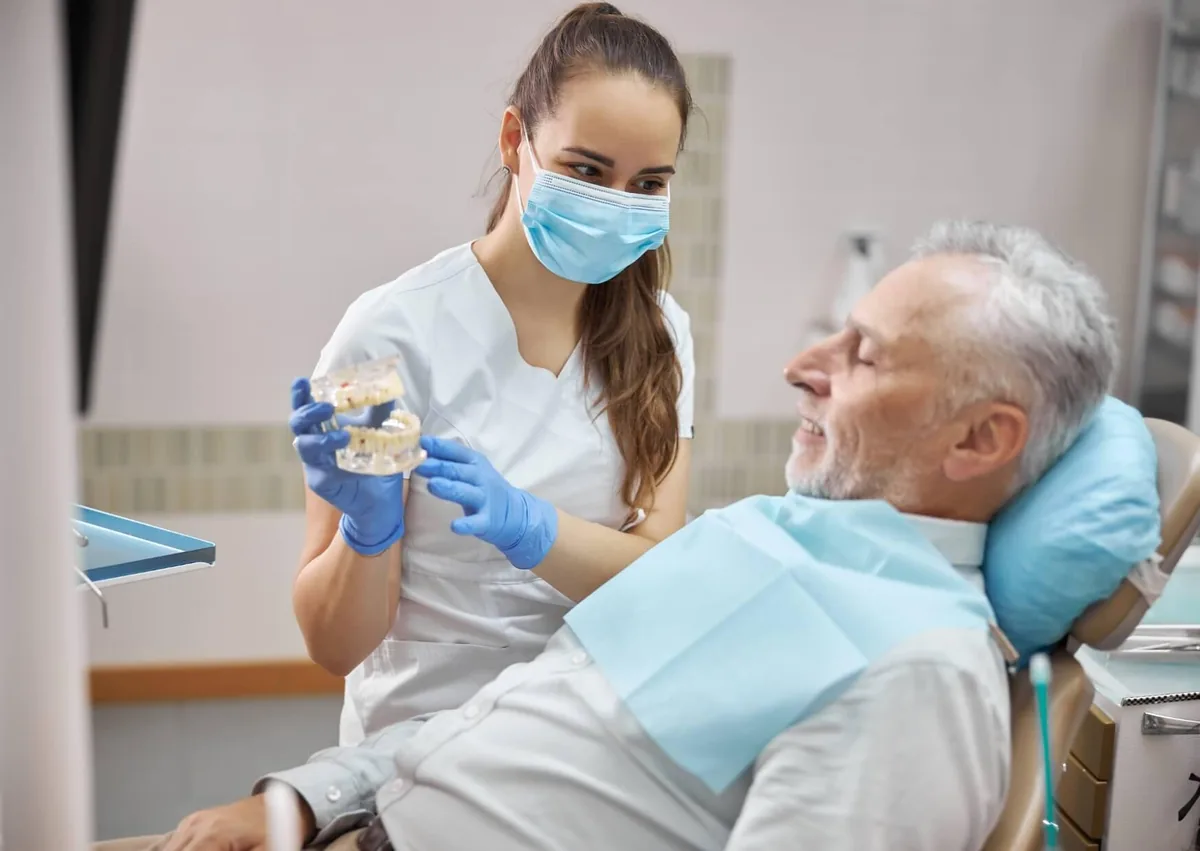
Treatment often starts with planning and removal of any tooth that cannot be saved. The implant is then placed in the jaw, sometimes with bone grafting, and allowed to heal while the bone bonds to the implant surface in a process called osseointegration.
Healing often takes several months, although the timeline varies by location in the mouth, bone quality, medical factors, and whether immediate temporary teeth are appropriate. If you want a more detailed timeline, read about how long implants take.
The final crown, bridge, or denture is made after the implant is stable enough to support it. Temporary soreness, swelling, bruising, and mild bleeding can happen after surgery, so patients should follow their treating clinician's instructions rather than relying on general online advice.
Implants do not get cavities, but the surrounding gum and bone can still become inflamed or infected. Daily brushing, cleaning between implant parts, professional maintenance, and periodic imaging when indicated help catch problems early.
Avoiding tobacco, managing diabetes with the appropriate medical professional, and wearing a dentist-recommended nightguard if you grind your teeth may lower risk. Long-term maintenance is part of the true cost and should be considered when comparing treatment plans.
An implant should be checked if it feels loose, the bite changes, the restoration chips, or the surrounding tissue bleeds repeatedly. Early care may make a complication easier to treat.
Schedule a dental evaluation if you have a missing tooth, a loose or painful tooth, recurring gum swelling, trouble chewing, or a denture that no longer feels secure. Prompt care may help preserve bone and clarify whether an implant or another replacement option makes sense.
After implant surgery, contact the treating office if pain or swelling gets worse, bleeding continues, pus develops, fever appears, a bad taste does not go away, numbness persists, or the implant or temporary tooth feels loose.
Seek urgent medical care for trouble breathing or swallowing, rapidly spreading swelling of the face or neck, uncontrolled bleeding, confusion, or other severe symptoms.
A personalized exam is the right next step when symptoms are persistent, worsening, severe, or unclear. Bringing written estimates from other offices can also help a dentist explain whether the proposed plans truly cover the same procedures, materials, and follow-up care.
A focused consultation can compare implant options, anticipated fees, and any surgical needs so you can choose the safest, most cost-effective plan. Contact Lovett Dental for dental implants in Houston, TX to request a consultation; call the office at (832) 617-5530 or schedule online to get started.
They may be. Dental schools can offer reduced fees because supervised students or residents provide care, but eligibility, appointment availability, treatment time, and services offered may differ from private practices.
Coverage varies by plan. Some policies help with the crown, extraction, or other related services, while others exclude implants or apply waiting periods, annual maximums, or missing-tooth clauses.
In selected cases, yes. Infection, bone condition, implant stability, gum shape, and cosmetic needs all affect whether immediate placement is a good option.
Implants can function for many years, but no clinician can promise lifelong success. Gum health, hygiene, smoking, medical conditions, bite forces, restoration wear, and regular dental care all affect longevity. Read more about how long dental implants last.
It can be, but only if the quote covers the same treatment and appropriate clinical safeguards. Compare itemized fees, clinician qualifications, materials, imaging, temporary restorations, follow-up, and complication policies before deciding.
Lovett, Splendid & Haven Dentistry
Dental Offices in TX