

Open ’til 7pm + Saturday
Call
832-804-7427
832-804-7427
Hearing that a tooth may need to be removed can feel stressful, but tooth extraction is sometimes the safest and healthiest option when a tooth cannot be saved. A badly damaged, infected, impacted, or overcrowded tooth can affect your comfort, bite, and long-term oral health.
Lovett Dental provides tooth extractions in Houston, TX, with a focus on careful evaluation, patient comfort, and clear treatment planning. If you have tooth pain, swelling, a broken tooth, or wisdom teeth concerns, a dentist can examine the area and explain whether extraction or another treatment is the right next step.
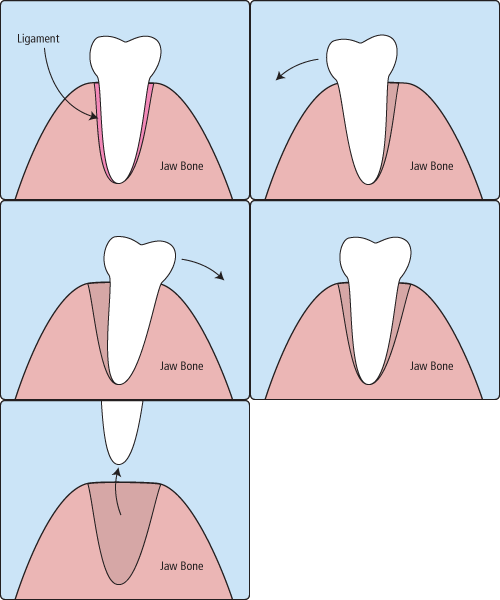
A tooth extraction is the removal of a tooth from its socket. Extractions may be simple or surgical depending on the tooth’s position, condition, and whether it is fully visible above the gumline.
Before recommending removal, your dentist will usually evaluate whether the tooth can be saved with a filling, crown, root canal, or another restorative option. If the tooth cannot be predictably restored, extraction may help prevent ongoing pain, infection, or damage to nearby teeth.
Sometimes, a tooth is too damaged or unstable to keep. Other times, a tooth may need to be removed to protect surrounding teeth, prepare for orthodontic treatment, or address an impacted wisdom tooth.
Not every painful tooth needs to be removed. However, certain symptoms should be checked promptly so a dentist can determine whether the tooth can be saved or whether extraction may be needed.
| Symptom or Situation | What It May Suggest | Recommended Action |
|---|---|---|
| Severe tooth pain | Deep decay, infection, or nerve irritation | Schedule a dental exam as soon as possible |
| Swelling near a tooth or along the jaw | Possible infection or abscess | Contact the dental office promptly |
| Broken tooth below or near the gumline | The tooth may be difficult to restore | Have the tooth evaluated for repair or removal |
| Pain near the back of the mouth | Possible wisdom tooth problem | Schedule a wisdom teeth evaluation |
| Loose adult tooth | Possible gum disease, trauma, or bone support loss | Schedule an exam to review treatment options |
| Facial swelling, fever, trouble breathing, or trouble swallowing | Possible spreading infection | Seek emergency medical care immediately |
At Lovett Dental, tooth extractions are planned with comfort, safety, and long-term oral health in mind. Your dentist will examine the tooth, review X-rays if needed, explain your options, and discuss whether the tooth should be removed or treated another way.
When extraction is recommended, the team will explain the procedure, aftercare instructions, expected recovery timeline, and replacement options if the removed tooth needs to be restored later.
| Type of Extraction | How It Works | When It May Be Used |
|---|---|---|
| Simple extraction | The dentist loosens and removes a tooth that is visible above the gumline | For teeth that are fully erupted and can be removed without surgical access |
| Surgical extraction | The dentist may need to access the tooth through the gum or remove it in sections | For impacted, broken, partially erupted, or more complex teeth |
| Wisdom tooth extraction | Removal of third molars, which may be simple or surgical depending on position | For painful, impacted, infected, or hard-to-clean wisdom teeth |
Every extraction starts with an evaluation. Your dentist will examine the tooth, review your symptoms, and may take X-rays to understand the tooth roots, surrounding bone, and nearby structures. Many patients begin with a comprehensive dental exam.
If the tooth may be saved, your dentist may discuss options such as a filling, crown, root canal, or another restorative treatment. If extraction is the better choice, the team will explain why and help you understand what to expect.
Local anesthesia is used to numb the area before the tooth is removed. For patients who feel anxious or need a more complex procedure, sedation dentistry may be discussed when appropriate.
After the extraction, you will receive instructions for controlling bleeding, protecting the clot, eating safely, cleaning the area, and knowing when to call the office. Following these instructions helps support healing and reduces the risk of complications.
During the procedure, the area around the tooth is numbed so you should not feel sharp pain. You may feel pressure or movement as the dentist loosens and removes the tooth. If the tooth is impacted, broken, or difficult to access, a surgical extraction may be needed.
Your dentist will work carefully to remove the tooth and protect the surrounding tissue. Once the tooth is removed, gauze is usually placed over the area to help control bleeding and support clot formation.
Recovery instructions may vary depending on the type of extraction, but the main goal is to protect the healing area and avoid disturbing the blood clot that forms in the socket.
Not every extracted tooth needs to be replaced. Wisdom teeth and some baby teeth usually do not require replacement. However, if an adult tooth used for chewing or appearance is removed, replacing it may help protect your bite, chewing ability, and surrounding teeth.
Lovett Dental offers several restorative options depending on your needs, oral health, and budget:
Some extractions cannot be avoided, especially when a tooth is impacted or severely injured. However, many extractions related to decay or gum disease may be reduced with early dental care and prevention.
If you are searching for tooth extractions near you in Houston, Lovett Dental can help you understand your options. Whether you have severe tooth pain, a broken tooth, wisdom tooth concerns, or a tooth that may not be restorable, the first step is a dental exam.
Schedule a dental appointment with Lovett Dental to discuss tooth extraction, pain relief, and replacement options if needed.
If you have questions before scheduling, contact Lovett Dental to talk with a team member.
Many patients begin feeling better within a few days after a simple extraction. Surgical extractions, wisdom teeth removal, or more complex cases may take longer. Your dentist will provide a recovery timeline based on your procedure.
Some patients return to work or school the next day after a simple extraction. If the extraction is surgical, multiple teeth are removed, or sedation is used, you may need more time to rest. Your dentist will give you specific guidance before and after treatment.
The area is numbed with local anesthesia before the tooth is removed, so you should not feel sharp pain during treatment. You may feel pressure or movement. Sedation may be available for patients who feel anxious or need more complex care.
You may be asked to avoid straws, smoking, vaping, vigorous rinsing, hard foods, and strenuous activity during the early healing period. These steps help protect the blood clot and lower the risk of dry socket or delayed healing.
Dry socket can happen when the blood clot in the extraction site becomes dislodged or does not form properly. It may cause increasing pain after the first few days. If you think you may have dry socket, contact the dental office for evaluation and care.
Call the dental office if bleeding does not slow as expected, pain worsens instead of improving, swelling increases, or you notice fever, drainage, or a bad taste that does not go away. For facial swelling, trouble breathing, or trouble swallowing, seek emergency medical care immediately.
Sometimes a tooth replacement plan can begin right away, but it depends on the tooth, bone support, infection level, and overall treatment plan. In some cases, healing is needed before a dental implant, bridge, or denture is placed.
The cost of a tooth extraction depends on whether the extraction is simple or surgical, whether sedation is used, and whether additional treatment is needed. Lovett Dental can review your treatment plan and explain estimated costs before care begins.
Many dental insurance plans cover part of the cost of medically necessary tooth extractions, but coverage varies. The office team can help review your benefits and explain your estimated out-of-pocket cost.
Yes. Children or teens may need extractions for baby teeth that do not fall out, severe decay, orthodontic preparation, dental injuries, or wisdom teeth concerns. A dentist can recommend age-appropriate treatment based on the exam and imaging.
No. Wisdom teeth do not always need removal. Extraction may be recommended if they are impacted, painful, infected, damaging nearby teeth, or difficult to clean. A dentist can monitor them with exams and imaging when removal is not immediately needed.
Lovett, Splendid & Haven Dentistry
Dental Offices in TX