

Open ’til 7pm + Saturday
Call
832-804-7427
832-804-7427
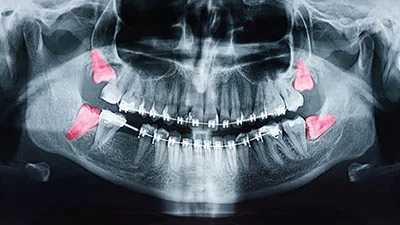
An impacted tooth is a tooth that does not fully come through the gums or does not erupt in the correct position. This can happen when there is not enough space in the mouth, when teeth are crowded, or when a tooth develops at an angle.
Wisdom teeth are commonly impacted, but canine teeth can also become impacted. Impacted canine teeth are often noticed in children and teens when the permanent teeth are developing, usually around ages 10 to 14. Adults can also have impacted teeth that were not detected earlier.
At Lovett, Splendid, and Haven Dental, our Houston dental team can evaluate impacted teeth and recommend the right next step. Treatment may involve monitoring, orthodontics, oral surgery, or a combination of services depending on the tooth’s position and the patient’s needs.
If you or your child may have an impacted tooth, call 832-804-7427 or contact us online to schedule an appointment.
A tooth is considered impacted when it is blocked from erupting fully into the mouth. The tooth may remain under the gum, partially break through, or come in at an incorrect angle. Impacted teeth can affect nearby teeth, gums, bone, and bite alignment if they are not evaluated and treated when needed.
Canine teeth, sometimes called eye teeth, play an important role in guiding the bite and supporting the shape of the smile. When a permanent canine tooth is impacted, early diagnosis can make treatment more predictable and may help reduce the risk of future complications.
Impacted teeth can happen for several reasons. In many cases, the issue is related to tooth position, jaw size, or crowding. A dental exam and imaging can help determine why the tooth has not erupted properly.
Some impacted teeth cause noticeable symptoms, while others are only found during a dental exam or X-ray. This is one reason routine dental visits are important, especially for children and teens whose permanent teeth are still coming in.
| Possible Sign | What It May Mean |
|---|---|
| A permanent tooth has not come in | The tooth may be delayed, blocked, or impacted. |
| A baby tooth stays in place too long | The adult tooth may not be erupting normally. |
| Crowding or shifting teeth | An impacted tooth may be affecting nearby teeth. |
| Swelling, tenderness, or redness | The area may be irritated or infected and should be evaluated. |
| Pain near the gum or jaw | The tooth may be pressing against nearby tissue or teeth. |
| No symptoms at all | Some impacted teeth are only visible on dental X-rays. |
If a tooth is missing from the smile, delayed in eruption, or causing pain or swelling, a dentist can evaluate the area and determine whether treatment is needed.
Early diagnosis can make impacted tooth treatment easier to plan. When impacted canine teeth are found early, orthodontic treatment may be used to create space and guide the tooth into a better position. In some cases, oral surgery may be needed to expose the tooth so it can be moved into place.
When impacted teeth are not found until adulthood, treatment may still be possible, but the approach may be different. The dentist may need to evaluate the tooth’s position, nearby roots, bone support, gum health, and whether the tooth can be safely guided into alignment.
Treatment depends on the type of impacted tooth, its position, the patient’s age, and whether the tooth is causing symptoms or affecting nearby teeth. Some impacted teeth may only need monitoring, while others require orthodontic treatment, oral surgery, or extraction.
| Treatment Option | When It May Be Recommended | Goal |
|---|---|---|
| Monitoring | The tooth is not causing problems and does not need immediate treatment. | Track changes with exams and imaging. |
| Space Creation | Crowding is blocking the permanent tooth from erupting. | Make room for the tooth to come in properly. |
| Orthodontic Treatment | The tooth needs guidance into the correct position. | Move the impacted tooth into alignment over time. |
| Oral Surgery Exposure | The tooth is trapped under the gum and needs help erupting. | Expose the tooth so orthodontics can guide it into place. |
| Extraction | The tooth cannot be safely moved or is causing complications. | Protect nearby teeth, gums, and bone. |
For impacted canine teeth, treatment often involves both orthodontic therapy and oral surgery. The orthodontic portion may help create space and gently guide the tooth into the correct position. The surgical portion may involve exposing the tooth so it can be attached to an orthodontic appliance.
Impacted canine treatment is planned carefully because canine teeth are important for bite function and smile balance. The exact process can vary, but it often includes several steps.
| Step | What to Expect |
|---|---|
| Dental Exam | The dentist checks the mouth, bite, baby teeth, and missing or delayed permanent teeth. |
| X-rays or Imaging | Imaging helps show where the impacted tooth is located under the gum. |
| Treatment Planning | The team determines whether monitoring, braces, surgery, or extraction may be needed. |
| Creating Space | Orthodontics may be used to make room for the impacted canine. |
| Surgical Exposure | If needed, the tooth is uncovered so it can be guided into place. |
| Guided Movement | Braces or orthodontic appliances gently move the tooth into alignment over time. |
Not every patient needs every step. Your dentist or specialist can explain the recommended plan after reviewing your exam and imaging.
Some impacted teeth may not cause immediate symptoms, but they can still create problems over time. The risk depends on the tooth’s position, how close it is to nearby teeth, and whether it is causing pressure, infection, or damage.
Regular dental checkups can help detect impacted teeth before they lead to more serious complications. If you have pain, swelling, drainage, fever, or difficulty opening your mouth, contact a dental professional promptly for guidance.
Impacted teeth can affect patients at different ages. The best treatment approach often depends on whether the tooth is still developing, whether nearby teeth are affected, and how long the tooth has been impacted.
| Patient Age Group | Common Concern | Why Evaluation Helps |
|---|---|---|
| Children | Delayed eruption or baby teeth not falling out | Early detection may help guide permanent teeth as they develop. |
| Teens | Impacted canine teeth or crowding | Orthodontics may help create space and guide the tooth into alignment. |
| Adults | Previously undetected impacted teeth | Evaluation helps determine whether treatment, monitoring, or removal is needed. |
Impacted teeth may require more than one type of dental care. Lovett, Splendid, and Haven Dental provide access to several specialty dental services that may be involved in diagnosis, treatment planning, and follow-up care.
If you or your child has a tooth that has not come in, a baby tooth that has not fallen out, swelling near the gumline, or concerns about tooth alignment, our Houston dental team can help. An evaluation can determine whether the tooth is impacted and what treatment options may be appropriate.
Call Lovett, Splendid, and Haven Dental at 832-804-7427 or contact us online to schedule an appointment for impacted teeth treatment in Houston, TX.
An impacted tooth is a tooth that does not fully erupt through the gum or comes in at the wrong angle. It may be blocked by other teeth, bone, lack of space, or another obstruction.
Canine teeth can become impacted, especially when there is not enough room for them to erupt properly. They are often detected in children or teens during routine dental exams and X-rays.
Signs may include a permanent tooth that does not come in, a baby tooth that stays in place too long, crowding, or swelling near the gum. However, some impacted teeth cause no symptoms and are only found with dental imaging.
Some delayed teeth may erupt without treatment, but truly impacted teeth often need professional evaluation. A dentist can determine whether the tooth should be monitored, guided with orthodontics, exposed surgically, or removed.
No. Not every impacted tooth requires surgery. Treatment depends on the tooth’s position, symptoms, age of the patient, and risk to nearby teeth. Some cases may be monitored, while others may need orthodontic or surgical care.
Impacted canine teeth are often treated with orthodontics to create space and guide the tooth into position. In some cases, oral surgery is needed to expose the tooth so it can be moved into place with braces or another appliance.
An untreated impacted tooth may damage nearby teeth, contribute to crowding, cause gum irritation, increase the risk of infection, or lead to cyst formation. The risk varies, so an evaluation is important.
Yes. Adults can still be evaluated for impacted teeth. Treatment options depend on the tooth’s position, oral health, bone support, and whether the tooth can be safely moved or should be monitored or removed.
Your dental team will discuss comfort options before treatment. Some soreness may occur after orthodontic adjustments or oral surgery, but your provider can explain what to expect and how to manage discomfort safely.
You should schedule an appointment if a permanent tooth has not come in, a baby tooth has not fallen out, teeth are shifting, or there is pain or swelling near the gums. Prompt evaluation is especially important if symptoms include swelling, drainage, fever, or worsening pain.
Lovett, Splendid & Haven Dentistry
Dental Offices in TX