

Open ’til 7pm + Saturday
Call
832-804-7427
832-804-7427
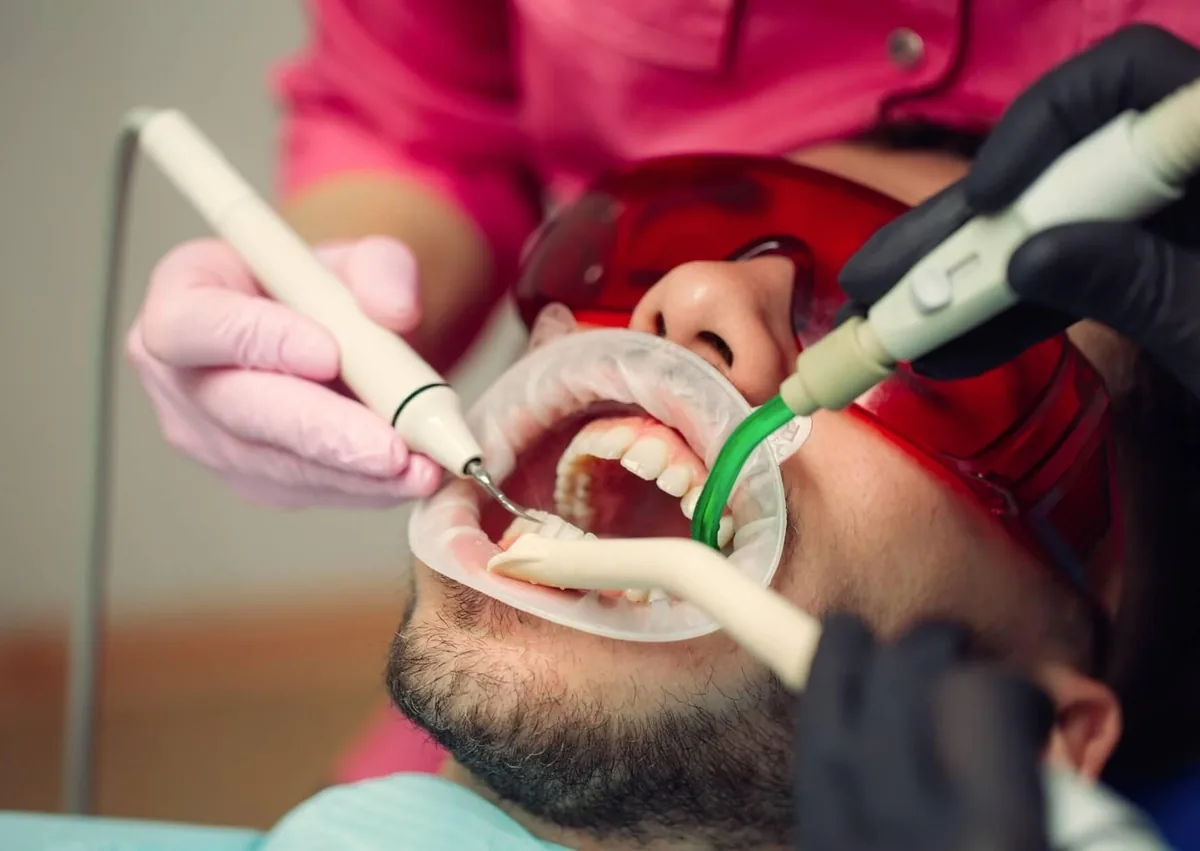
A routine dental cleaning removes plaque, tartar, and surface stains from teeth around the gumline. It is usually recommended for patients with healthy gums or mild gingivitis, while signs of periodontitis may mean a different treatment, called scaling and root planing, is the better choice.
If you’re wondering whether a routine cleaning is enough or whether deeper care is needed, a general dentistry visit can clarify your gum health and treatment options. Lovett Dental in Houston, TX can evaluate your gums, recommend the right cleaning or referral, and help you plan follow-up care.
A routine dental cleaning usually starts with a review of any changes in your oral health and a look at your teeth and gums. The dental team may also measure the spaces between the teeth and gums, called periodontal pockets, to check for signs of gum disease.
During the cleaning, hand instruments or an ultrasonic device remove plaque and tartar from the teeth and just below the gumline. The teeth are then polished to remove surface stains, and flossing may be done at the end.
Fluoride treatment may also be recommended based on cavity risk. If you want more detail about timing, read about how long a cleaning takes.
A routine cleaning is meant to maintain oral health, not treat deeper infection under the gums. If the exam shows deeper deposits, bone loss, or active periodontal disease, your dentist may recommend a different type of cleaning.
A deep cleaning is the common term for scaling and root planing. Unlike a routine dental cleaning, it is used to treat periodontitis, a more advanced form of gum disease that affects the tissues and bone supporting the teeth.
For care that goes beyond routine maintenance, referral to periodontics may be recommended.
|
Feature |
Routine Cleaning |
Scaling and Root Planing |
|---|---|---|
|
Main purpose |
Maintain oral health and remove plaque, tartar, and surface buildup |
Treat periodontitis below the gumline |
|
Treatment area |
Tooth surfaces and around the gumline |
Deep periodontal pockets and root surfaces |
|
Numbing |
Usually not needed |
Local anesthetic is often used |
|
Visit pattern |
Often completed in one visit |
May be completed in sections of the mouth |
|
Follow-up |
Regular recall visits |
Reassessment and periodontal maintenance may be needed |
A dentist may recommend scaling and root planing when there are deep periodontal pockets, bleeding, tartar below the gumline, gum recession, tooth mobility, or bone loss on X-rays. The recommendation is based on what is found during the exam, not just how long it has been since your last cleaning.
Most patients are advised to have a routine dental cleaning about every six months. That said, the right timing depends on your plaque buildup, gum health, cavity risk, home care, medical history, tobacco use, and past dental problems.
Some patients may need visits more often, while others with lower risk may have a longer recall interval. If you are unsure what schedule fits you, your dentist can recommend one based on your history and risk factors.
For broader guidance on visit timing, see how often to schedule exams. Patients who have already been treated for periodontitis often need periodontal maintenance instead of standard routine cleanings.
Most routine cleanings cause pressure, vibration, scraping, and water spray more than true pain. Mild tenderness or sensitivity can happen, especially if tartar is heavy or the gums are inflamed.
If something feels sharp or uncomfortable, tell the dental team right away. They can change instruments, pause, use desensitizing measures, or discuss whether local anesthetic would help.
Some bleeding can happen when gums are irritated or inflamed. Ongoing bleeding, swelling, or pain after the visit should not be ignored and deserves a dental evaluation.
A cleaning removes buildup, but it does not diagnose every dental problem. A dental exam helps the dentist check for cavities, gum disease, cracked teeth, bite issues, soft tissue concerns, and problems with existing dental work.
Dental X-rays can show issues that are not visible during a visual exam. These may include decay between teeth, bone loss, infections near the roots, or problems under fillings and crowns.
X-rays are not always needed at every cleaning visit. Their timing depends on your age, symptoms, history, exam findings, and risk level. Learn more about how tooth decay develops.
Mild gum inflammation, called gingivitis, may improve with a routine dental cleaning and better home care. But deeper pockets, ongoing bleeding, gum recession (see causes of receding gums), bone loss, or loose teeth may point to periodontitis instead.
When that happens, a routine cleaning may not be enough. Your dentist may recommend scaling and root planing or refer you to periodontics for further evaluation and treatment.
Seek dental care if your gums bleed often, your breath stays bad, your gums are pulling back, your teeth feel loose, or chewing becomes uncomfortable.

Prompt care is especially important if you have facial swelling, fever, pus, severe pain, trouble swallowing, or trouble breathing. For more warning signs, review signs you need an appointment.
Until your visit, brush twice a day with fluoride toothpaste and clean between your teeth with floss or another dentist-recommended tool. These steps help control plaque, but they do not remove hardened tartar or replace an exam when symptoms are present.
A focused evaluation will identify whether periodontal treatment or maintenance is needed. Contact Lovett Dental for general dentistry in Houston, TX to discuss treatment options. Call us at (832) 617-5530 to schedule an appointment.
Possibly. Mild bleeding from gingivitis may still be managed with a routine cleaning, but frequent bleeding can also be a sign of periodontitis, so an exam and gum measurements are important.
No. Scaling and root planing is used when exam findings show periodontitis, not as a more thorough version of routine cleaning for every patient.
It can remove some surface stains from coffee, tea, or tobacco. Stains inside the tooth or more stubborn discoloration may need a separate evaluation.
Usually not, unless your dental team gives you specific instructions. If fluoride varnish or local anesthetic was used, follow the guidance you were given at the visit.
Lovett, Splendid & Haven Dentistry
Dental Offices in TX