

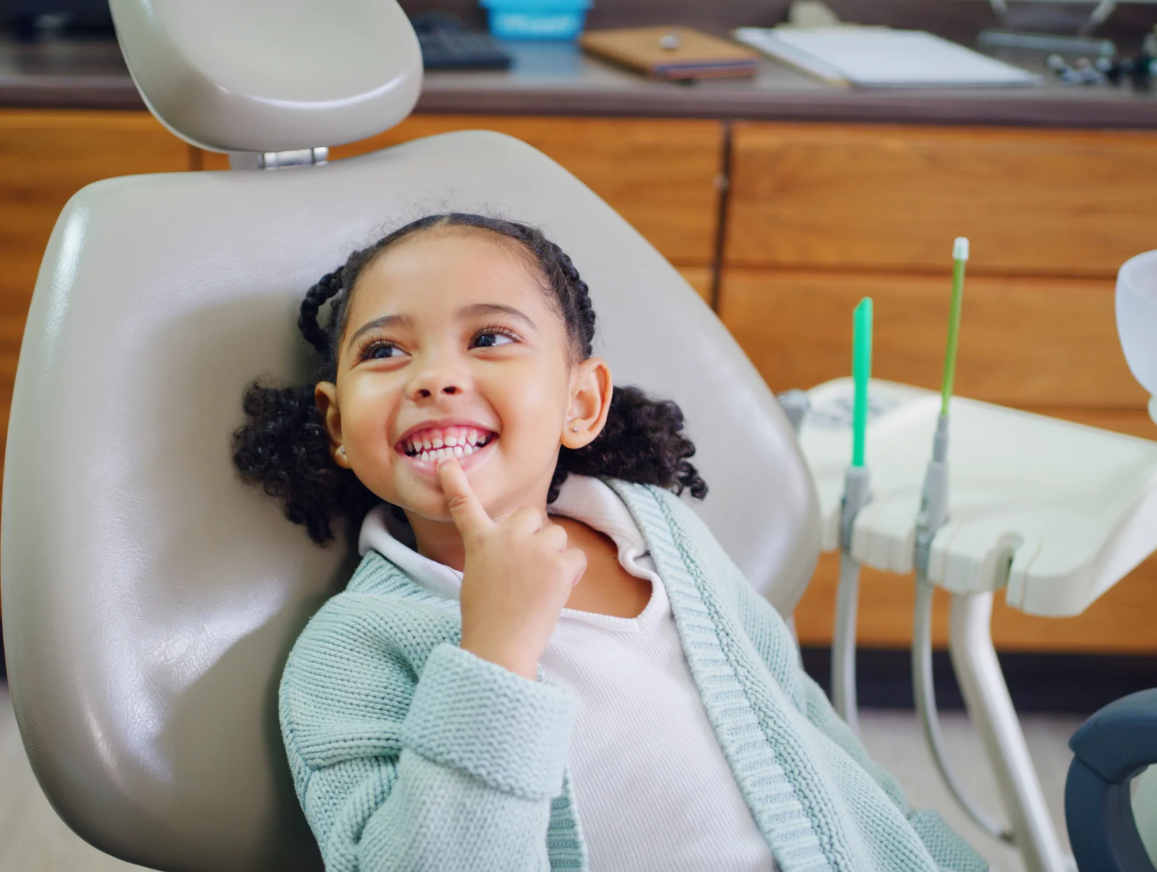
Most children lose their first baby tooth around age 6, although anywhere from about 5 to 7 years old can still be normal. The lower front teeth are often the first to go, followed by the upper front teeth. If you are wondering when do kids lose their first tooth, the short answer is that there is a normal range, and the timing depends on how your child’s teeth and jaws are developing.
If you want a better idea of what is normal for your child, Lovett Dental offers pediatric dentistry and dental exams for growing smiles across Texas.
Why baby teeth fall out
Baby teeth do not simply “drop out” on their own. As the permanent teeth develop under the gums, they slowly dissolve the roots of the baby teeth above them. This process is called root resorption. Once enough of the baby tooth root is gone, the tooth gets loose and eventually falls out.
This is a normal part of growth. In many children, the teeth that came in first are also the first ones to fall out. That is why the lower front teeth are usually first on the baby teeth falling out timeline.
Need a child-friendly dental check? If your child has a loose tooth, delayed tooth loss, or a permanent tooth coming in behind a baby tooth, find the nearest Lovett Dental office to schedule an evaluation.
Typical baby teeth falling out timeline
Every child is a little different, but this general timeline is common.
| Baby tooth | Typical age it falls out |
|---|---|
| Lower central incisors (bottom front teeth) | 6 to 7 years |
| Upper central incisors (top front teeth) | 6 to 7 years |
| Upper and lower lateral incisors | 7 to 8 years |
| First molars | 9 to 11 years |
| Canines | 9 to 12 years |
| Second molars | 10 to 12 years |
Keep in mind that this is a guide, not a strict rule. Some healthy children start a little earlier, and some start later.
What can affect the timing?
Several factors can make a child lose baby teeth a little earlier or later than average:
- Genetics: Children often follow a pattern similar to their parents.
- When the baby teeth first came in: Early eruption can sometimes mean earlier loss.
- Jaw growth and spacing: Crowding or tight spacing can change how permanent teeth come in.
- Missing permanent teeth: If a permanent tooth is absent, the baby tooth may stay in longer.
- Injury or trauma: A fall or hit to the mouth can loosen a baby tooth early.
- Tooth decay or infection: Severe decay can lead to early baby tooth loss.
- Overall development: Children grow at different rates, and teeth follow that pattern too.
What is normal during first tooth loss?
These signs are usually normal:
- A tooth that becomes loose over days or weeks
- Mild gum tenderness
- A tiny amount of bleeding when the tooth comes out
- A child wanting to wiggle the tooth with their tongue
- A permanent tooth starting to show soon after the baby tooth falls out
Some children also feel mild pressure as the adult tooth moves into place. That can be normal if there is no major pain or swelling.
When timing may need a dental check
A dental visit is a good idea if the timing seems far outside the usual range or if the tooth loss does not look like normal shedding.
| Situation | Why it matters |
|---|---|
| Baby tooth falls out very early after injury or severe decay | Early loss can affect spacing and how the permanent tooth comes in. |
| No loose teeth by about age 7 or 8 | The dentist may want to check whether the permanent teeth are developing on schedule. |
| Adult tooth appears, but baby tooth is still firmly in place | This can happen with “shark teeth” and may need monitoring or treatment. |
| Significant pain, swelling, bad breath, pus, or fever | These may point to infection, not normal tooth loss. |
| Bleeding that does not stop with gentle pressure | Persistent bleeding should be evaluated. |
| Only one side seems delayed for a long time | The dentist may check for crowding, impaction, or a missing permanent tooth. |
Not sure whether it is normal? A quick dental exam can help confirm whether your child is simply following their own timeline or whether something needs attention.
Common reasons a child may lose a tooth earlier than expected
Sometimes a child loses a baby tooth before the usual timeline. Common causes include:
- Trauma: A fall, sports injury, or hit to the mouth can loosen or knock out a tooth.
- Decay: If a baby tooth has extensive decay, it may need treatment or may be lost early.
- Infection: Infection around a baby tooth can damage the supporting tissues.
- Root changes: In some cases, root resorption happens faster than expected.
Early tooth loss matters because baby teeth help hold space for the permanent teeth. If one is lost too soon, nearby teeth can drift.
How a dentist evaluates the issue
If a parent is worried about the baby teeth falling out timeline, a dentist usually starts with a simple exam and questions such as:
- How old is your child?
- When did the baby teeth first come in?
- Has there been an injury, cavity, or swelling?
- Are any permanent teeth already visible?
- Is your child having pain when chewing or brushing?
The dentist will look at:
- The looseness of the baby tooth
- The gums and surrounding tissues
- Spacing and crowding
- How the permanent teeth are erupting
- The bite and jaw development
If needed, dental X-rays may be used to check whether the permanent tooth is present, where it is positioned, and whether there are any concerns such as delayed eruption, crowding, or infection.
Parents who want a general overview of early visits can also read when should a child go to the dentist? or learn more about what a pediatric dentist does.
Treatment options and what they help with
Many children do not need treatment at all. They just need monitoring and reassurance. When care is needed, the approach depends on the cause.
Observation and routine follow-up
This is common when tooth loss is happening within a normal range. It helps families know what to expect and when to come back if things change.
Care for decay or infection
If a loose baby tooth is painful because of a cavity or infection, the dentist may recommend treatment to protect the child’s comfort and oral health.
Removal of a retained baby tooth
If a permanent tooth is coming in but the baby tooth is not getting loose enough, the dentist may recommend removing the baby tooth. This can help the permanent tooth move into a better position.
Space maintenance after early tooth loss
If a baby tooth is lost too early, a dentist may consider whether a space maintainer is helpful. This type of appliance helps keep room open for the permanent tooth.
Orthodontic monitoring
If crowding, delayed eruption, or bite issues are involved, the child may need monitoring as the permanent teeth come in. Families often appreciate having general and specialty dental services connected under one brand when a simple loose-tooth question turns into a spacing or eruption concern.
Low-risk things parents can do at home
- Let the child gently wiggle the loose tooth with clean hands or their tongue.
- Do not force or yank a tooth that is still firmly attached.
- Offer soft foods if the area is tender.
- If the tooth comes out, use clean gauze and gentle pressure for a few minutes if there is slight bleeding.
- Keep brushing and flossing carefully around the area.
- Use water to rinse gently if food gets trapped.
If a baby tooth is knocked out in an accident, call a dentist for guidance. In general, a knocked-out baby tooth is not put back in, because that can affect the developing permanent tooth underneath.
Signs you should call a dentist sooner
- Your child has strong pain, swelling, or fever
- The gums look very red or there is drainage or pus
- A tooth was lost because of trauma
- The permanent tooth is erupting in an unusual position
- The baby tooth has been loose for a long time but will not come out
- You are concerned your child is far ahead of or behind the usual timeline
Why regular dental visits help
Regular checkups make it easier to tell the difference between normal growth and a problem that needs attention. They also help catch cavities, spacing changes, and eruption issues early. For parents with busy schedules, having access to comprehensive dental care and a broader network of locations can make follow-up simpler if a child needs more than routine monitoring.
Find a Lovett Dental location near you
If you have questions about when your child should lose their first tooth, or if something about the baby teeth falling out timeline seems off, Lovett Dental can help. Because Lovett Dental has multiple offices across the area, families can browse all dental office locations here to find the practice that is most convenient. You can also contact Lovett Dental for scheduling information or call 832-804-7427.
Looking for a convenient office? View all Lovett Dental locations to find a nearby practice for your child’s dental visit.
Frequently asked questions
Is it normal for a child to lose a tooth at age 5?
Yes. Many children lose their first baby tooth between ages 5 and 7. If the tooth seems loose in the usual way and there is no injury, pain, or swelling, it may be part of normal development.
Which tooth usually falls out first?
The lower front teeth are most often first, followed by the upper front teeth.
What if my child is 7 and still has no loose teeth?
That can still be normal for some children, but it is reasonable to ask a dentist to check. The dentist may look at growth patterns, spacing, and whether the permanent teeth are developing as expected.
Should I pull my child’s loose tooth out?
Usually, no. It is best to let the tooth come out when it is ready. Forcing it out too early can cause pain and bleeding.
What are “shark teeth” in kids?
This term usually means a permanent tooth is coming in behind a baby tooth that has not fallen out yet. It can sometimes correct itself as the baby tooth loosens, but a dentist should check if the baby tooth stays firm.
How much bleeding is normal when a baby tooth falls out?
A small amount of bleeding is common. Gentle pressure with clean gauze usually stops it within a few minutes. If bleeding is heavy or does not stop, call a dentist.